
Adopt Your Own Island on Lake Norman
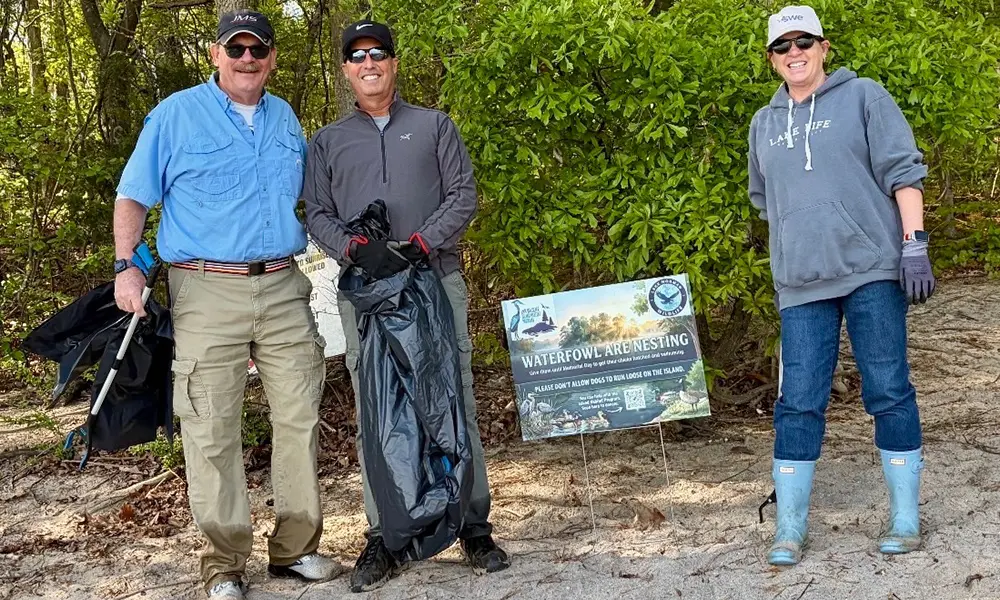
Island adopters are encouraged to visit their islands at least three times a year to remove litter, document conditions and report habitat concerns / Lake Norman Wildlife photo
By Jon Show – Have you always dreamed of “owning” your own island but don’t have millions in your bank account? Lake Norman Wildlife is offering the next best thing.
The uninhabited islands scattered across Lake Norman are becoming increasingly important refuges for wildlife as development and recreational activity continue to reshape the lake’s shoreline.
To meet the need, the organization has expanded its Island Habitat Program to give those islands more consistent stewardship, from litter removal and habitat restoration to wildlife monitoring and nesting projects.
The program currently includes 74 islands, with 22 adopted by volunteers. The organization’s goal is to eventually have an active steward or stewardship team assigned to every island.
Island adopters are encouraged to visit their islands at least three times a year to remove litter, document conditions, photograph wildlife and report habitat concerns. Volunteers also can participate in native plantings, nesting-box installations and other restoration projects.
The program was reorganized following Hurricane Helene, when more than 100 volunteers helped remove more than 50 tons of storm debris from Lake Norman. The effort, which included dock sections, lumber, foam and household trash, highlighted the need for a more coordinated approach to island stewardship.
The revamped program divides the lake into geographic districts supported by county coordinators, with a central coordinator overseeing the program. Volunteers use an online reporting system to document visits, hours worked, litter removed, wildlife observations, photographs and habitat concerns.
“Hurricane Helene showed the need for a more organized network capable of responding both to routine habitat needs and major disasters,” said Billy Wilson, president of Lake Norman Wildlife. “It also demonstrated that more residents throughout the Lake Norman community are ready to take an active role in protecting the lake.”
During 2025, 24 volunteers reported removing about 400 pounds of routine litter. Another 27 volunteers participated in larger debris-removal efforts that removed about 8,500 pounds, according to Lake Norman Wildlife. The organization expects to more than double the amount removed by the end of 2026.
Common debris includes beverage containers, food packaging, fishing line, foam, abandoned floats and pieces of dock material. Larger debris can include pressure-treated lumber, damaged dock sections and flotation foam.
The islands provide nesting, feeding and resting habitat for great blue herons, ospreys, green herons, waterfowl, turtles and songbirds. They also provide shoreline and nearshore habitat for fish and other aquatic species.
Heron Island in Cornelius is among the lake’s most significant wildlife habitats. About 25 years ago, it supported the lake’s only known natural great blue heron rookery.
Lake Norman Wildlife said the colony remains vulnerable to erosion and the effects of concentrated nesting activity, which can damage trees and vegetation. The organization has documented additional heron colonies on other islands and said some birds may have been displaced from Heron Island.
The group also has installed more than 80 osprey and great blue heron nesting platforms around Lake Norman, along with dozens of nesting boxes for species including wood ducks, brown-headed nuthatches, prothonotary warblers and owls.
Lake Norman Wildlife said increased boating and recreational use can put additional pressure on the islands through litter, campfires, vegetation damage and disturbance during nesting season.
The organization hopes the expanded program will eventually provide regular documentation of every island while reducing litter and disturbance, improving habitat and allowing faster responses to storm damage and erosion.
More information on the island program is available at www.lnwc.org.