
Cornelius Targeting Commercial Tax Growth
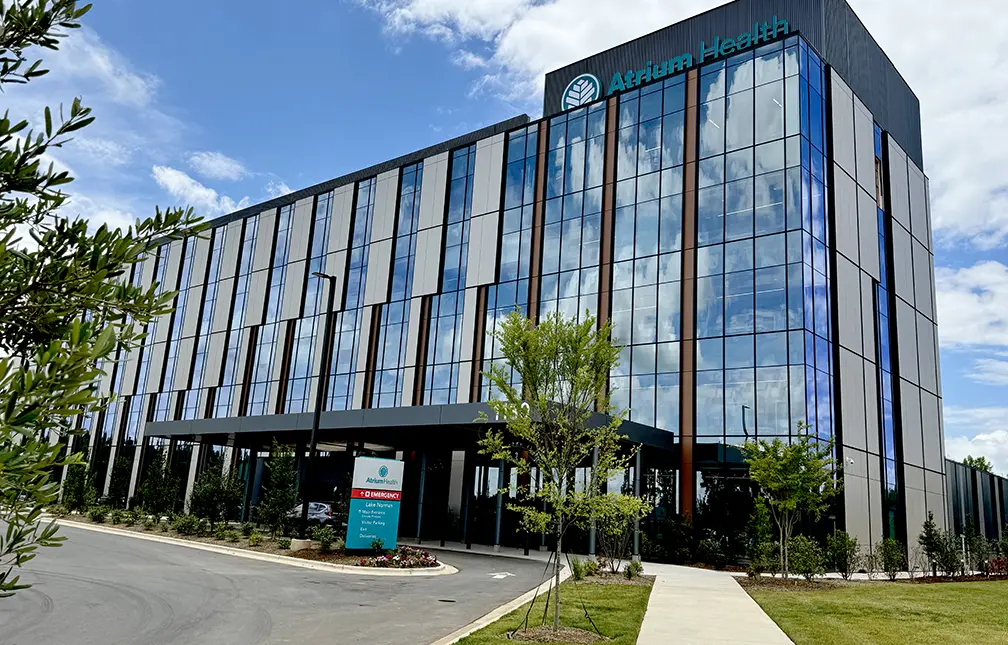
Atrium Health property has more than 50 acres that could be developed
By Jon Show – For the first time in its history, the Town of Cornelius is preparing to hire an economic development manager — a move officials say will help the town compete for corporate investment, strengthen its commercial tax base and shape future growth.
The new position represents a shift in how Cornelius approaches development. For decades, the town’s growth has been driven primarily by residential demand, with people drawn to Lake Norman, its quality of life and proximity to Charlotte.
Now, town leaders want to be more intentional about attracting businesses that bring the appropriate mix of jobs, diversify revenue and allow more residents to work closer to home.
Town Commissioner Rob Carney spent 13 years of his career guiding municipalities through economic development and stressed that the philosophical shift isn’t about landing large industrial projects or data centers.
Rather, he said, the goal is to be more selective about the type of growth Cornelius pursues — focusing on projects that provide upper-echelon jobs, strengthen the tax base and align with the town’s long-term vision.
“We’re not talking about bringing in a 500-person manufacturing facility,” he said. “We’re talking about finding the right companies that fit Cornelius.”
That would mean focusing on smaller corporate offices, headquarters and high-paying employers that suit the community’s existing character.
“It’s about defining what means quality of life for Cornelius and the type of mix that we want to have,” Carney said.
Balancing a residential tax base
One of the main reasons town officials are pursuing economic development is the imbalance in Cornelius’ revenue mix, which relies heavily on taxing residential properties.
Communities with a solid balance have a 60-40 split between residential and commercial development. Cornelius is significantly more residential, with 83% of its tax base tied to residential properties and commercial development making up only 17%.
“We’re striving for a healthier blend, and we’re trying to reduce the burden on our residents,” said Wayne Herron, who recently retired as deputy town manager after spending his career in planning and development.
It currently costs the Town of Cornelius more to service the average residential household than it collects from property taxes.
Services such as police, fire, EMS, parks, trash collection and infrastructure maintenance all come with costs. Residential development increases those demands, while businesses typically require fewer municipal services.
Slower residential growth, paired with increased investment in police and fire services — all demanded by voters — will mean one of three things: stagnation, cuts to service levels or higher taxes.
“The cost of police and fire is not going down, so the residential taxpayer is going to have to bear that burden,” Herron said. “But if we had more commercial it could really offset that burden. That’s why it’s critical that we bring in businesses, and it’s crucial that we bring in the right businesses.”
Targeting the right companies
The new economic development manager won’t be tasked with chasing massive industrial projects. Instead, officials envision a targeted approach focused on companies that match Cornelius’ available land, workforce and lifestyle.
Attractive targets include industries such as banking, fintech, health care and technology-related companies.
Officials aren’t looking to bulldoze homes in residential areas. They’re eyeing a limited number of parcels, primarily along N.C. 115 and N.C. 21, that already carry favorable zoning designations.
One opportunity is the Atrium Health property, where more than 50 aacres could eventually be developed. Rather than single large employers, Carney, interviewed before this week’s announcement that the Wegmans grocery chain purchased a tract of land on the property, said he sees the site as a potential location for multiple boutique offices or headquarters.
Evidence that the town can only encourage and not dictate land use, Wegmans had approached town officials in the past, sources said, with the town advocating for more corporate uses rather than retail grocery.
If Wegmans pursues a store in the property it will have to follow the standard rezoning process.
The evolution of downtown Cornelius could also become part of the overall development strategy, potentially through smaller office space, business incubators or other opportunities that combine employment, restaurants and walkable development.
Addressing traffic concerns
Any discussion about additional employers in Cornelius will raise concerns about traffic, an issue that has been one of the town’s biggest challenges as population growth has continued.
But town officials argue that creating more jobs in Cornelius could actually help address some of the transportation problems created by the town’s current jobs-housing imbalance.
A study from UNC Charlotte found that roughly 88% of people who live in Cornelius do not work here. Residents leave town each day for jobs elsewhere, while workers from outside Cornelius drive in.
The broader goal is to create more high-end job opportunities for people who live here, meaning less time on the road and more money spent in the community.
“We want people who live here to have jobs within three or four miles of where they live and not have to get on the highway every day to get work,” said Bill Russell, executive director with the Lake Norman Chamber of Commerce. “That’s what we’re trying to avoid.”
Preparing for opportunities
Observers said Cornelius has missed potential economic development opportunities in the past because the town lacked the staff, relationships or available property information needed to compete.
A dedicated economic development professional would help package available properties, work with landowners and connect Cornelius with the broader network of site consultants and recruiters who help companies choose locations.
Carney said that process requires building relationships with organizations such as the Economic Development Partnership of North Carolina and commercial real estate firms that connect businesses with potential sites.
“Cornelius has never had exposure to that,” he said.
Long-term vision
Officials said residents shouldn’t expect overnight results.
A new economic development manager would likely spend the first year learning the community, identifying opportunities and building relationships. Actual corporate announcements could take several years.
For Cornelius, success won’t be measured by the number of projects landed, but by the quality of projects that come to town, create jobs, expand the tax base and become long-term partners in the community.
The shift in philosophy marks a new approach for Cornelius: moving from managing growth to actively shaping what the town becomes.
Cornelius has historically let the market dictate its future rather than actively pursuing the types of development the community wants — the proverbial tail wagging the dog.
“Cornelius has grown based upon what the market sees for us and not what Cornelius would like to see for itself,” Carney said. “This is about defining what quality of life means for Cornelius and the type of residential and commercial mix that we need to remain a vibrant, attractive town long into the future.”
Our Partners