
Fire department transitioning to full-time staff
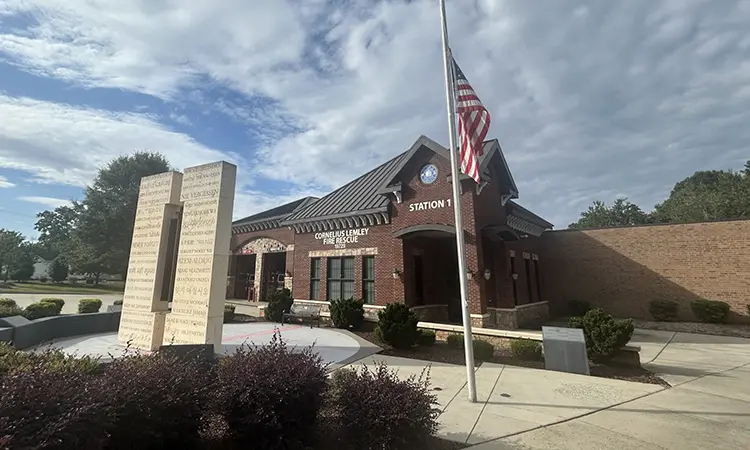 By Dave Vieser – In 2020, the Cornelius Town Board unanimously approved the transition of Cornelius-Lemley Fire Rescue from a volunteer force to a full-time staff. Town officials anticipated the transition would take 15 years and adjusted budget forecasts accordingly.

Barbee
Fire Chief Guerry Barbee and Town Manager Andrew Grant provided an update on the progress. Their responses are combined and edited for brevity.
Q: What is the current staffing status of the fire department?
A: There are 21 full-time firefighters, including seven per shift and three administrative staff members. The department also has 53 part-time firefighters and seven volunteers, for a total of 81 firefighters. The current plan calls for a fully staffed fire department by 2036, though that timeline is contingent on continued budget support and justification for the transition.
Q: Where are the full-time firefighters coming from?

Grant
A: Most full-time firefighters have come from other municipalities across the state or from smaller local departments that employ only part-time staff.
Q: What is the salary for a full-time Cornelius firefighter, and does it increase annually?
A: The starting salary is $48,800 and increases by 5% after the first probationary year. Salaries may also increase when the town budget includes cost-of-living adjustments or merit-based raises.
Q: Are other Charlotte-area bedroom communities transitioning to full-time fire departments?
A: Yes. Harrisburg, Matthews, Mint Hill, Mooresville and Mount Holly have operated as full-time fire departments for several years. Other nearby towns, including Davidson, Pineville and Huntersville, are in transition phases similar to Cornelius.
Q: Has the transition affected mutual aid calls or response times?
A: No. On a daily basis, the three fire departments in northern Mecklenburg County cross town boundaries and respond together. The number of personnel dispatched depends on the type and severity of the incident. The department continues to respond to medical calls and is often first on scene.
Q: What impact has the transition had on the town budget?
A: Hiring full-time firefighters increases personnel and operating costs, including equipment and training. While the cost increase has been significant, the transition plan phases in those increases incrementally. In 2020, the fire department budget was $1.66 million. It is $4.87 million in the current fiscal year.
Q: Will full-time staffing affect insurance ratings for residents and businesses?
A: Staffing levels heavily influence a fire department’s ISO rating, accounting for roughly 50% of the score. ISO evaluates on-duty personnel, training, equipment and response capability. Higher staffing levels improve fire suppression capacity, which can lead to better ratings and potentially lower insurance premiums.
Our Partners