
Giving Thanks: Kris Fountain and Affordable Housing
 Kris Fountain at The Puckett Pottery House ribbon cutting / Photo by Jason Benavides
At the Rotary meeting? Fountain is there with a green flower on his lapel — his mom’s favorite color. Cain Center dedication? Red flower — another tribute to his mom. He doesn’t wear cuff links as often as he used to, but they were his father’s.
Fountain is at home in any networking environment, and now he’s working to build a network of organizations that can provide affordable housing services to more people in his role as CEO of the Lake Norman Community Development Corporation.
Growing up
The importance of taking care of his community was handed down to Fountain by his grandmother, “GG,” while growing up in southwestern Michigan.
During the school year, Fountain and his two younger brothers were raised by their single mother, who worked 12-hour shifts, six days a week, in a manufacturing plant.
Starting in elementary school, they spent summers with GG, a native of Mississippi who became the area’s first licensed African American female general contractor.
She owned two dozen rental units, and during the summers GG taught the boys carpentry, drywall, painting and basic electrical and plumbing skills. When a licensed professional was needed, they were told to sit and watch.
Through GG, they learned the value of hard work and job skills and how to take pride in what they did.
“GG told us our work represents you, your family, and the God you worship. She raised the standard and it stuck with me,” he said. “The principles were far greater than the lessons.”
Their grandmother valued them enough to eventually pay them for their services. By the time college rolled around, Fountain managed a team of workers 20 years his senior and put himself through college.
Armed with a degree in real estate finance from Western Michigan University, he began his career managing a low-income housing department before joining the American Cancer Society.
He returned to affordable housing with The Affordable Housing Group and eventually with Habitat for Humanity upon relocating to the Charlotte area in 2009, and joined the Lake Norman CDC in 2025.
“He’s a gentle spirit and has so much love and respect for folks with challenges in our community,” said Woody Washam, who helped create the organization and sits on the board of directors. “He just doesn’t give up.”
History
The Lake Norman CDC was founded as the Cornelius CDC in 2022 when the Rev. Michelle Hoverson came to Washam — then mayor — to help a single mom with four school-age children who could no longer afford to live in Cornelius.
Washam and Hoverson enlisted the help of Cornelius resident George Searle, whose life passion was affordable housing. They formed a task force on the issue, and the CDC was born, led in its early years by Hoverson and later rebranded as the Lake Norman CDC.
When Hoverson retired, Searle turned to Fountain — a fellow board member — to take the organization to new heights.
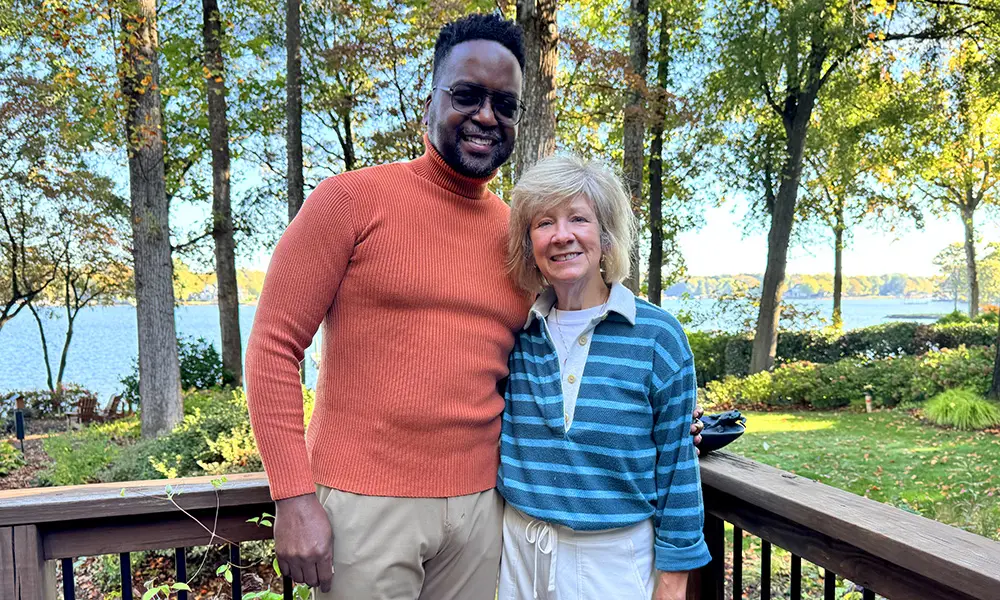 From left, Kris Fountain and Connie Searle / Photo by Jason Benavides
Connie Searle recounted something her husband told her after Fountain interviewed for the job that spoke to his passion for giving.
“It was something he learned from a pastor,” she said. “The first 30 years of life is learning, the next 30 is earning, and the last 30 is about returning.”
On his first day on the job, Fountain and George Searle ate breakfast at Famous Toastery, and Searle handed Fountain a note on a napkin with his equation for success, “Activity x Effectiveness = Results.”
“I told him I agree, but I needed to expand that equation to include strategy,” Fountain said.
Building the network
The CDC now serves residents throughout Cornelius, Huntersville and Davidson, and has further regional growth in its sights.
Under Fountain’s leadership, the organization implemented an expanded approach to housing assistance that puts collaboration among local nonprofits at the center of its work.
“There isn’t one nonprofit that’s big enough to address all of these issues,” he said.
Lake Norman CDC’s programs span several points on what Fountain calls the housing continuum. Its Rental Bridge program provides temporary assistance to cost-burdened renters, while its critical home repair program helps older homeowners remain safely in their homes. The organization also provides down payment assistance to first-time homebuyers.
The CDC also assists homeowners facing financial difficulties, including past-due property taxes and homeowners insurance.
“The secret sauce” is not simply the rental assistance, Fountain said, but the financial education that helps participants manage, protect and eventually grow their money.
The two-year Rental Bridge program, for example, requires participants to take part in financial education. Participants who complete the program have increased their credit scores by an average of 56 points, reduced their debt by about $4,200 and increased their savings by approximately $2,000.
Fountain said the need extends across the housing spectrum, from homelessness and emergency shelter to transitional and permanent housing, affordable housing and market-rate housing.
Remembering George Searle
That network philosophy is at the heart of the George Searle Memorial Initiative (GSMI), which launched last summer in memory of Searle, who died in October 2025.
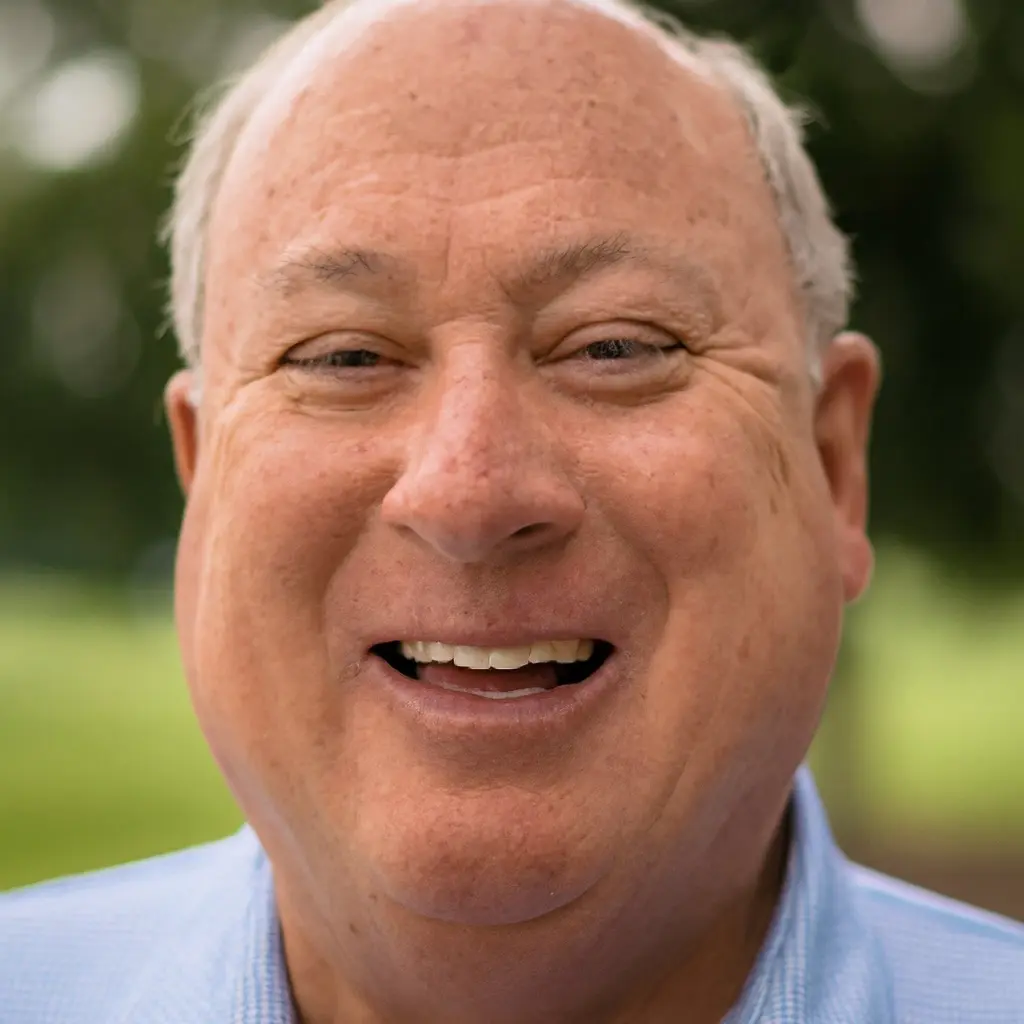 Searle
Fountain described Searle as a “gentle giant” and someone who was widely known to combine quiet leadership with a commitment to service.
The initiative, primarily funded by the Peninsula Community Foundation, which Searle once led, provides one-time microgrants, along with coordinated support from eight nonprofit organizations, to help individuals and families facing short-term housing crises maintain stable housing.
The eight participating organizations are Lake Norman CDC, Ada Jenkins Center, Beds for Kids, Hope House Foundation, Neighborhood Care Center, One Huntington Green, Pottstown Heritage Group and Smithville Community Coalition. Fountain said Searle had been directly or indirectly involved with all of them.
The program serves seniors, working families, essential workers, renters, homeowners, people with disabilities and households facing unexpected financial hardship.
Fountain regularly offers the example of a Huntersville mother who works as a convenience store cashier in Cornelius and was spending 53% of her household income on rent. The woman was struggling to keep up with bills but wanted to remain in Huntersville because of the support her 8-year-old son, who has autism, was receiving at his public school.
Through the Searle initiative, Lake Norman CDC coordinated enough assistance to cover one month’s rent and a past-due electric bill. Other participating organizations provided additional support, including financial education and coaching, furniture for the boy’s bedroom and a dining room table.
“That’s what collaboration looks like,” Fountain said. “It’s not a buzzword. You’re seeing it in action.”
Lake Norman CDC coordinates the initiative, including processing and screening applications, distributing payments and connecting recipients with participating organizations.
“In a very real way, GSMI is a living map of George’s community service and relationships,” Fountain said.
The broader goal, he said, is to move away from fragmented services and toward a coordinated network in which nonprofits communicate and work together.
“Programs can spark a change, but you need a network to have lasting change,” he said.